


Business Professional Dress Code for Men: The Complete 2025 Guide
You just got a client meeting with a Fortune 500. Your boss asked you to step up for the quarterly board presentation. Or maybe you're starting a new role and you want to make the right impression from day one. Whatever the scenario, one question sits at the center of it all: what exactly does business professional mean — and how do you nail it?
1. What Is Business Professional Attire?
Business professional is the most formal end of the office dress code spectrum. It signals authority, attention to detail, and respect for the people in the room. In most industries — law, finance, consulting, banking, corporate management — this is still the expected standard for meetings, presentations, and client-facing interactions.
At its core, business professional attire for men means a full suit in a classic color, a dress shirt, a tie, leather dress shoes, and — a detail that surprisingly many professionals get wrong — proper over-the-calf dress socks.
The Suit
Two-piece or three-piece in navy, charcoal, or dark grey. Tailored to fit — not boxy, not tight.
The Shirt
White or light blue, 100% cotton, freshly pressed. Collar stays are a quiet power move.
The Shoes
Black or dark brown leather oxfords or derbies. Polished. Always polished.
The Socks
Over-the-calf dress socks that stay up all day. This is the detail that separates the careful dresser from everyone else.
2. The Foundation: Getting the Suit Right
The suit is non-negotiable in a business professional environment. But not all suits are created equal. Here's what matters most:
Color
Stick to the classics: navy blue, charcoal grey, and dark grey are your workhorses. These colors are authoritative, versatile, and universally appropriate. A black suit tips into formal territory — fine for evening events, but slightly out of place in a daytime business setting. Once you have two or three of these in rotation, you can consider other options like medium grey or subtle pinstripes.
Fit
No detail matters more than fit. A $300 suit that fits perfectly will always outperform a $1,000 suit that doesn't. The jacket shoulders should sit flush at your shoulder seam, the chest should button without pulling, and the trouser break should be minimal — barely grazing the top of your shoe. If you're buying off the rack, factor in the cost of basic tailoring. It's worth every dollar.
Fabric
For year-round wear, a mid-weight wool (around 9–11 oz) is the gold standard. It drapes well, resists wrinkles, and breathes better than synthetic blends. For summer months, consider a lighter tropical wool or a wool-linen blend. For fall and winter, heavier wool or a flannel suit adds warmth and texture.
"Dressing professionally is not about vanity. It's about communicating respect — for your work, for your colleagues, and for the person sitting across the table from you."
— The Pierre Henry Guide to Professional Style3. Shirts and Ties
The Dress Shirt
Your dress shirt should always be a solid color or a very subtle pattern — fine pinstripes are acceptable, large checks are not. White remains the most authoritative choice for high-stakes meetings; light blue is slightly softer and equally professional. The shirt should be 100% cotton or a high-cotton blend, and it should be ironed — or at minimum, not visibly wrinkled. Pay attention to the collar: it should hold its shape throughout the day. Collar stays are a practical investment that most men underuse.
The Tie
In a true business professional environment, a tie is expected. The width should be proportional to your lapel — a standard 3 to 3.25 inch width works with most modern suits. Classic choices include solid silk ties in navy, burgundy, or forest green, as well as subtle patterns like small dots, repp stripes, or foulard prints. Avoid novelty ties, overly bright colors, or anything that draws more attention than the person wearing it.
The length of the tie matters: the tip should land right at your waistband. A properly dimpled knot — the four-in-hand or half Windsor — signals effortless competence.
4. Shoes That Command Respect
Shoes are one of the first things people notice, and they are the fastest way to undermine an otherwise strong outfit. In a business professional setting, the rules are straightforward:
The Right Styles
Oxford (closed lacing): The most formal dress shoe. Appropriate for everything from board meetings to black-tie adjacent events. Black cap-toe oxfords are the single most versatile shoe a professional man can own. Derby (open lacing): Slightly less formal than the Oxford, but still firmly in professional territory. The Derby's open lacing makes it slightly more comfortable for men with wider feet. Monk Strap: A sophisticated alternative that adds a hint of personality without compromising formality.
Color Coordination
Black shoes pair with navy and charcoal suits — always. Dark brown or oxblood shoes work beautifully with navy and medium grey. The old rule that "brown in town is a faux pas" has largely relaxed in most American professional environments, but when in doubt at a high-stakes event, go black.
And always — always — polish your shoes.
Pierre Henry Socks
The Socks That Actually Stay Up All Day
Crafted at our family's factory in the Americas with full manufacturing control, Pierre Henry over-the-calf dress socks are engineered for fit. No slipping, no bunching — just the clean, confident look that belongs with a great suit.
Shop Dress Socks5. The Detail Most Men Get Wrong: Socks
Here's a confession: most men — even well-dressed ones — treat socks as an afterthought. They grab a pair from the drawer, slip them on without thinking, and never consider what happens an hour later when those socks are pooling around their ankles at the most important meeting of the quarter.
Socks may be a small garment, but they are a visible one. Every time you cross your legs, climb a flight of stairs, or step up onto a platform to present, your socks are on display. A glimpse of bare leg above a dropped sock communicates something you probably don't intend to communicate.
The Rule: Over-the-Calf, Always
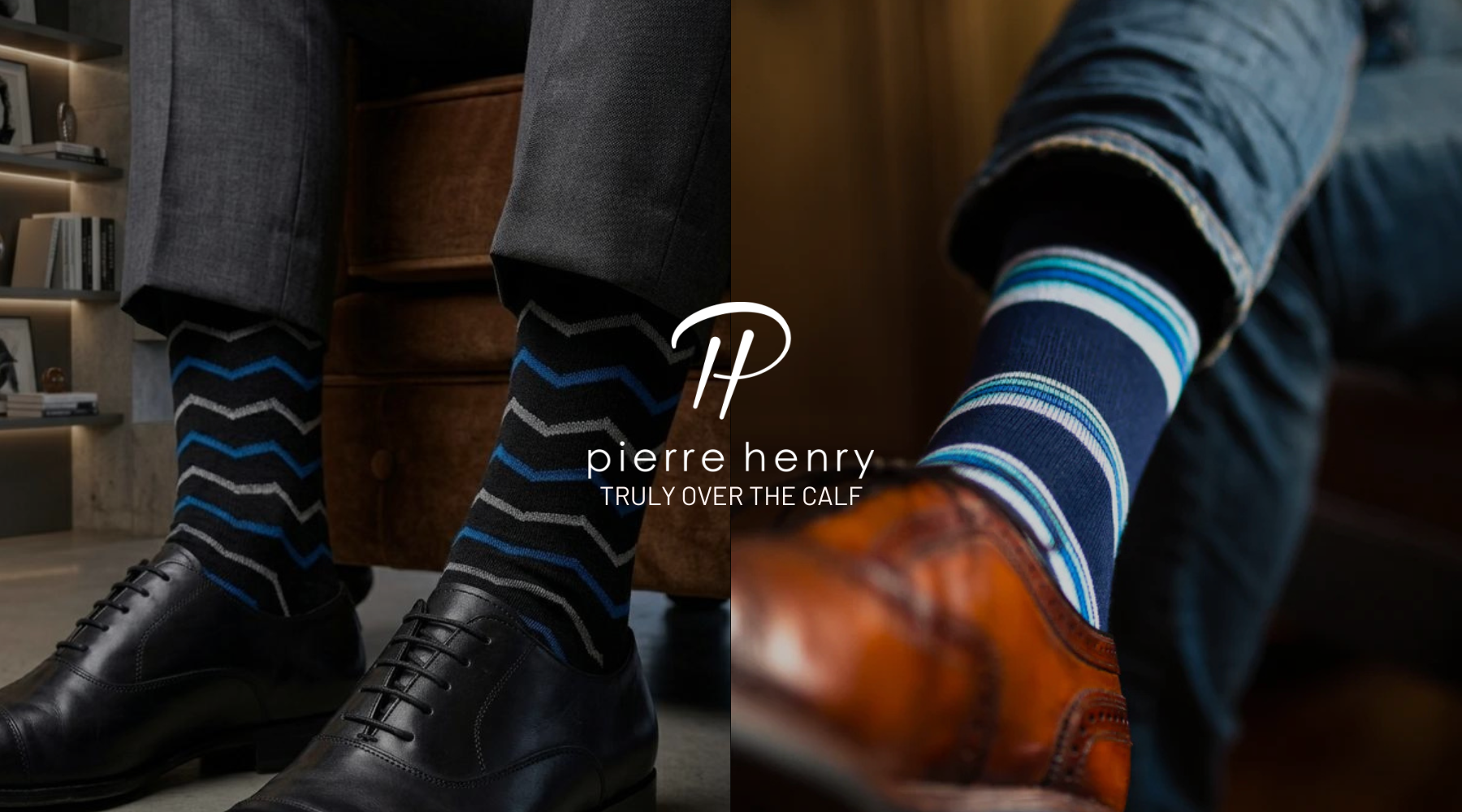
For business professional attire, the standard is clear: over-the-calf dress socks. These extend to just below the knee, ensuring that no matter how you sit, stand, or move, you'll never expose a patch of bare leg. They stay up because they're designed to — not because you're lucky that day.
Color and Pattern
The classic rule is to match your sock color to your trousers, not your shoes. This creates a clean, elongated line. So with charcoal pants, wear charcoal or dark grey socks. With navy, wear navy. This said, a well-chosen patterned sock — an argyle, a subtle stripe — can be a sophisticated signature move, as long as the pattern is classical and the colors stay within the palette of your outfit.
Why Quality Matters
There's a meaningful difference between a sock that holds its shape and elastic after 50 washes and one that doesn't. Pierre Henry Socks are manufactured under direct quality control at our family's factory in the Americas — which is why our customers consistently report that they last years longer than other brands they've tried. The reinforced construction keeps them up all day, which is ultimately what matters most.
6. Business Professional: The Do's and Don'ts
✓ Do
- Wear a full two-piece suit in navy, charcoal, or dark grey
- Iron your shirt — every time
- Wear over-the-calf socks that match your trousers
- Polish your shoes before important meetings
- Keep accessories minimal and intentional
- Get your suit tailored, even off-the-rack
- Wear a tie in traditional industries and client meetings
- Invest in quality pieces that last
✗ Don't
- Wear khakis or chinos — that's business casual
- Show up with wrinkled or lint-covered clothes
- Wear short socks that slide down
- Wear sneakers or boots, regardless of how "nice" they are
- Overdo the accessories — one watch, no bracelets
- Wear a suit that pulls, bunches, or bags
- Skip the tie for formal client meetings
- Wear novelty or colorful socks in traditional professional settings
7. Does Business Professional Vary by Industry?
Yes — and it's worth understanding those nuances so you don't overdress or underdress for your specific context.
Finance, Law, and Consulting
These industries remain the most formal. Full suits are the norm, ties are typically expected, and conservative colors dominate. When in doubt in these environments, err on the side of formality.
Corporate Management and Executive Roles
The expectation here is high, but there's slightly more room for personality — a well-chosen pocket square, a distinctive but tasteful tie, or a patterned sock. The key is that every choice looks intentional, not casual.
Real Estate and Sales
Client-facing professionals in these fields often need to project both authority and approachability. A sharp suit with slightly more personality in the accessories can strike that balance well.
Tech and Creative Industries
Business professional in a tech or creative context is often triggered by a specific event — a board presentation, a major pitch, a funding meeting — rather than being the daily standard. In these situations, the full kit still applies.
Frequently Asked Questions
Do I need to wear a tie for business professional?
In most traditional business professional environments — finance, law, consulting, banking — yes. A tie remains a standard expectation. In more modern corporate environments, the tie may be optional depending on company culture, but wearing one will always be appropriate in a business professional context. When in doubt, wear the tie.
Can I wear brown shoes with a navy suit for business professional?
Yes — dark brown or oxblood shoes with a navy suit is a classic, sophisticated combination that is fully appropriate in most American professional environments. For the most formal or conservative settings (courtrooms, major financial presentations), black shoes remain the safest choice.
What color socks should I wear with a dark suit?
The classic rule is to match your sock color to your trousers, not your shoes. So charcoal socks with charcoal trousers, navy with navy. This creates a clean, elongated line at the ankle. A subtle patterned sock in a complementary color can add personality while still looking polished — think dark argyle or thin stripes in the same color family.
What's the difference between business professional and business casual?
Business professional requires a full suit, dress shirt, tie, and leather dress shoes. Business casual relaxes those requirements — it may include dress slacks without a matching jacket, a polo shirt or open-collar button-down, or loafers instead of oxfords. Business casual is the standard for most everyday office environments; business professional is reserved for formal meetings, presentations, and high-stakes interactions.
Why do over-the-calf socks matter in a professional setting?
When you sit down and cross your legs — which you will, in virtually every professional meeting — your trouser leg rises. Over-the-calf socks ensure that no bare skin is visible, maintaining the clean, polished line that business professional attire requires. Shorter socks that slide down also create a bunched, disheveled appearance at the ankle that undermines even a well-tailored suit.
The Last Detail Your Suit Has Been Missing. Socks That Actually Stay Up.
Crafted at our family's factory in the Americas. Over-the-calf construction engineered to hold all day — through every meeting, every presentation, every handshake.
⭐⭐⭐⭐⭐ "These are by far the best socks he's ever owned." — Verified Customer


Leave a comment
This site is protected by hCaptcha and the hCaptcha Privacy Policy and Terms of Service apply.