

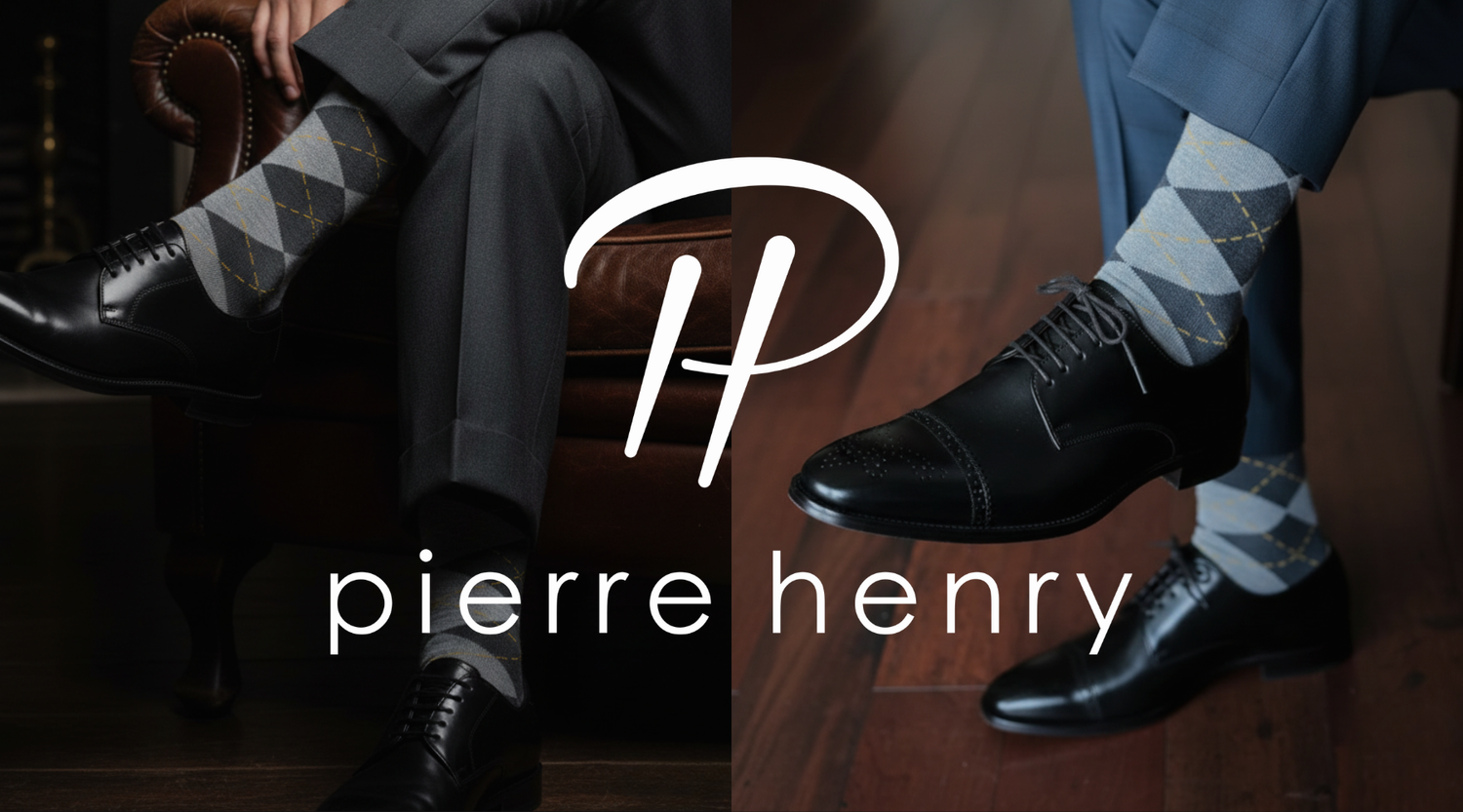
In a formal setting, your clothes speak before you do. Make sure they’re saying the right thing.
In the world of high-stakes business and formal galas, perfection is the baseline. While most men focus on the quality of their suit, it’s the small, overlooked errors that usually betray a lack of experience.
A formal dress code is a test of attention to detail. Committing one of these "fatal" mistakes doesn't just make you look unpolished—it subtly signals to peers and superiors that you aren't ready for the big leagues. Here is what to avoid in 2026.
1. The Unforgivable "Sock Gap"
This is the #1 style killer. When you sit down, your trousers naturally rise. If you are wearing standard mid-calf socks, they will slide down, revealing a flash of hairy leg.
The Fix: Formal dress code requires Over the Calf (OTC) socks. They are engineered to stay up all day, ensuring an unbroken silhouette from your shoes to your trousers. If your skin is visible, your professionalism isn't.
2. Matching Your Tie and Pocket Square Exactly
Buying a "matching set" is a rookie move. It looks forced and lacks sophistication. A pocket square should complement your tie, not replicate it. If your tie has a navy stripe, choose a pocket square with a navy edge or a subtle white-on-white texture.
3. Leaving the Vents Stitched Shut
You’d be surprised how often this happens. New suits come with the back vents (the slits in the jacket) stitched with an "X" of white thread to keep them flat during shipping. Cut them off. The same goes for the brand label on the jacket sleeve—it’s meant to be removed before wearing.
4. The Wrong Shoe-to-Belt Coordination
In formal wear, the rule is ironclad: your leathers must match. Black shoes require a black leather belt. Brown shoes require a brown belt. In ultra-formal Black Tie, you skip the belt entirely (use side adjusters or suspenders) to maintain the cleanest possible lines.
5. Sagging Shoulders and Long Sleeves
An expensive suit that doesn't fit is worse than an affordable suit that fits perfectly. Common errors include sleeves that cover your shirt cuffs (you should show about half an inch of cuff) and shoulders that overhang your natural frame. Sags and wrinkles suggest you borrowed the suit rather than owning it.
Don't Let the Details Fail You
The difference between "dressed up" and "well-dressed" is the foundation. Master your formal look with socks that never quit.
Upgrade to OTC Excellence
6. Wearing a Button-Down Collar with a Suit
Button-down collars (the ones with buttons on the collar points) are for casual or business casual settings. For a formal dress code, stick to a spread or semi-spread collar. It provides the necessary structure to frame your tie correctly.
7. Ignoring Fabric Seasonality
Wearing a heavy tweed suit to a summer evening event or a light linen suit to a winter gala shows a lack of sartorial awareness. Respect the season, and ensure your hosiery follows suit—breathable cotton for warmth, and substantial textures for the cold.


Leave a comment
This site is protected by hCaptcha and the hCaptcha Privacy Policy and Terms of Service apply.