

Career Style · Interview Playbook 2025
What to Wear to a Job Interview: The Men's Complete Playbook
Every industry. Every dress code. Every detail — including the one most candidates forget until it's too late.
You've prepared your answers. You've researched the company. You know your numbers. But here's what most candidates don't fully reckon with: the hiring manager starts forming an opinion the moment you walk through the door — and your outfit is doing the talking before your mouth is. The good news is this is one of the few variables in a job interview that is entirely within your control. This guide gives you a precise, no-ambiguity playbook for what to wear across every industry, every dress code, and every format — including virtual.
The One Rule That Covers Every Interview
Before any specific advice: always dress one level above the company's everyday standard. If the office is business casual, you wear business professional. If the office is casual, you wear business casual. You can always remove a jacket when you're in the room. You cannot add formality you don't have on you.
The data backs this up: 75% of employers prefer applicants who dress slightly more formally than the company norm. Walking in slightly overdressed signals respect for the opportunity. Walking in underdressed signals that you didn't bother to prepare — and if you didn't prepare for the outfit, why would they trust you to prepare for the job?
How to Research Any Company's Dress Code
Go to the company's LinkedIn page and scroll through employees' posts — especially those in the same role you're interviewing for. Look at event photos, conference photos, and office candids, not profile pictures. That's what people actually wear on a normal Tuesday. If you can't find it, ask the recruiter — it's a smart question that shows you're doing your homework.
The 3-Tier System: Decode Any Company's Culture
Not all companies — or job interviews — are the same. Here's a simple framework to classify any company you're interviewing with and know exactly what level to dress at:
Business Professional
Full matched suit, tie, dress shirt, polished Oxfords. Conservative colors. No exceptions.
Law firms · Investment banking · Management consulting · Corporate finance · Government · Insurance · Real estate
Business Casual+
Sharp blazer, dress trousers or clean chinos, leather shoes. A tie is optional but never wrong.
Corporate marketing · HR · Mid-size companies · Account management · B2B sales · Healthcare admin
Elevated Casual
Open-collar shirt, well-fitted chinos or dark jeans, clean leather sneakers or loafers. Still intentional.
Tech startups · Design agencies · Media companies · Gaming · Early-stage startups · Non-profits
One important note: even at a Tier 3 company, "elevated casual" does not mean casual. It means you put thought into every piece. A wrinkled shirt in a startup interview communicates the same thing as a wrinkled suit in a law firm interview: you didn't care enough to prepare.
Outfit by Industry: 5 Real Scenarios
Here are five concrete interview scenarios with complete outfit recommendations. These are not theoretical — they reflect the actual expectations of interviewers in these environments.
- SuitCharcoal or navy two-piece, fully matched, tailored
- ShirtWhite poplin, spread collar, freshly pressed
- TieNavy or burgundy, subtle pattern — half Windsor knot
- ShoesBlack cap-toe Oxford, high-polish shine
- BeltBlack leather, matching shoes exactly
- WatchClassic dress watch, leather strap
- Pocket sq.White, TV fold — or skip it entirely
- SocksCharcoal over-the-calf, stay-up construction
Key insight: In these environments, the interviewer is actively looking for signals that you understand professional standards. There is no upside to expressing personality through bold accessories here — save that for when you have the job.
- SuitNavy or medium grey, tailored fit
- ShirtLight blue or white, well-ironed
- TieRepp stripe or subtle pattern — room for personality
- ShoesDark brown Oxford or Derby — polished
- BeltDark brown leather, coordinated with shoes
- WatchClean dress or field watch
- Pocket sq.Optional — a confident touch if used well
- SocksNavy over-the-calf, subtle argyle acceptable
Key insight: Consulting firms look for sharp thinking and client presence. A well-chosen tie or pocket square signals that you understand how to manage your personal brand — which is part of the job.
- JacketNavy blazer or matched suit — either works
- ShirtWhite or light blue, open collar or with tie
- TrousersGrey dress trousers or matched suit trousers
- ShoesBrown leather Oxford or quality loafer
- TieOptional — read the company first
- WatchCan be bolder — sales values confidence
- Pocket sq.A subtle one adds personality that sells
- SocksOver-the-calf — a patterned stripe is fine here
Key insight: Sales managers are hiring someone to represent their brand to clients. Looking polished is part of the proof you can do the job. Don't undersell yourself with a mediocre outfit.
- JacketNavy or grey blazer — unstructured is fine
- ShirtOCBD or clean crewneck — open collar
- TrousersSlim-fit chinos in navy, grey, or olive
- ShoesClean leather loafer, Derby, or premium sneaker
- TieAlmost certainly too formal — skip it
- WatchDress watch or minimal sports watch both work
- BeltLeather or woven — clean and intentional
- SocksDress socks — room for color and pattern here
Key insight: The risk in tech is dressing too casually, not too formally. A blazer over an OCBD reads as "comfortable in both worlds" — exactly what a hiring manager wants to see in a candidate.
- TopQuality button-down, well-fitted turtleneck, or structured polo
- TrousersSlim chinos, dark well-fitting jeans (no distressing)
- OuterOptional: clean bomber, unstructured blazer
- ShoesPremium leather sneaker, Chelsea boot, or loafer
- FitEverything must fit — this is non-negotiable here
- ColorRoom for personality — show you have taste
- DetailsAn interesting watch or accessory works here
- SocksThis is where a bold Pierre Henry pattern earns its place
Key insight: In creative fields, your outfit is a portfolio piece. Too conservative and you look like you don't understand their culture. Too sloppy and you look like you don't care about craft. The sweet spot: intentional, edited, with one or two choices that show taste.
The Details That Separate Good From Great
The suit, the shirt, the shoes — those are table stakes. What separates a candidate who looks good from one who looks effortlessly authoritative is the caliber of the details. Here's where most men can improve immediately:
A $300 suit that fits beats a $1,000 suit that doesn't. Tailoring costs $50–120 and changes everything.
Shoes must be polished. Scuffed shoes signal that you stop short of the final 5% — not a hiring signal you want.
A wrinkled shirt in an interview communicates that you didn't prepare. Iron or steam everything the night before.
The Watch
A clean dress watch on a leather strap is appropriate for Tiers 1 and 2. It signals attention to detail without trying too hard. Keep it simple — a watch that prompts the comment "nice watch" in an interview is a watch that's too bold.
The Belt
Match your belt to your shoes. Exactly. Black shoes, black belt. Brown shoes, brown belt. This is one of the oldest rules in men's dress and one of the most commonly violated. Interviewers who care about style notice immediately — and hiring managers in formal industries often do.
Fragrance
Wear it — but underappply. You want a trace, not a presence. The person across the table should not be able to smell you. Spray once on the wrist or the back of the neck and nothing more.
Grooming
Get a haircut 5–7 days before the interview — fresh enough to be neat, not so fresh it looks like you just came from the barbershop. If you have facial hair, trim it the night before. Your hands will be visible during the handshake and across the table — clean, trimmed nails are not optional.
The Sock Problem No One Talks About
Here is the detail that costs candidates more credibility than almost any other piece of clothing — and it's almost never discussed. When you sit down in an interview, your trouser leg rises. If you're wearing short socks that have slipped down, you expose a patch of bare ankle above your shoe. It lasts a second. The interviewer registers it without necessarily knowing why. The impression sticks.
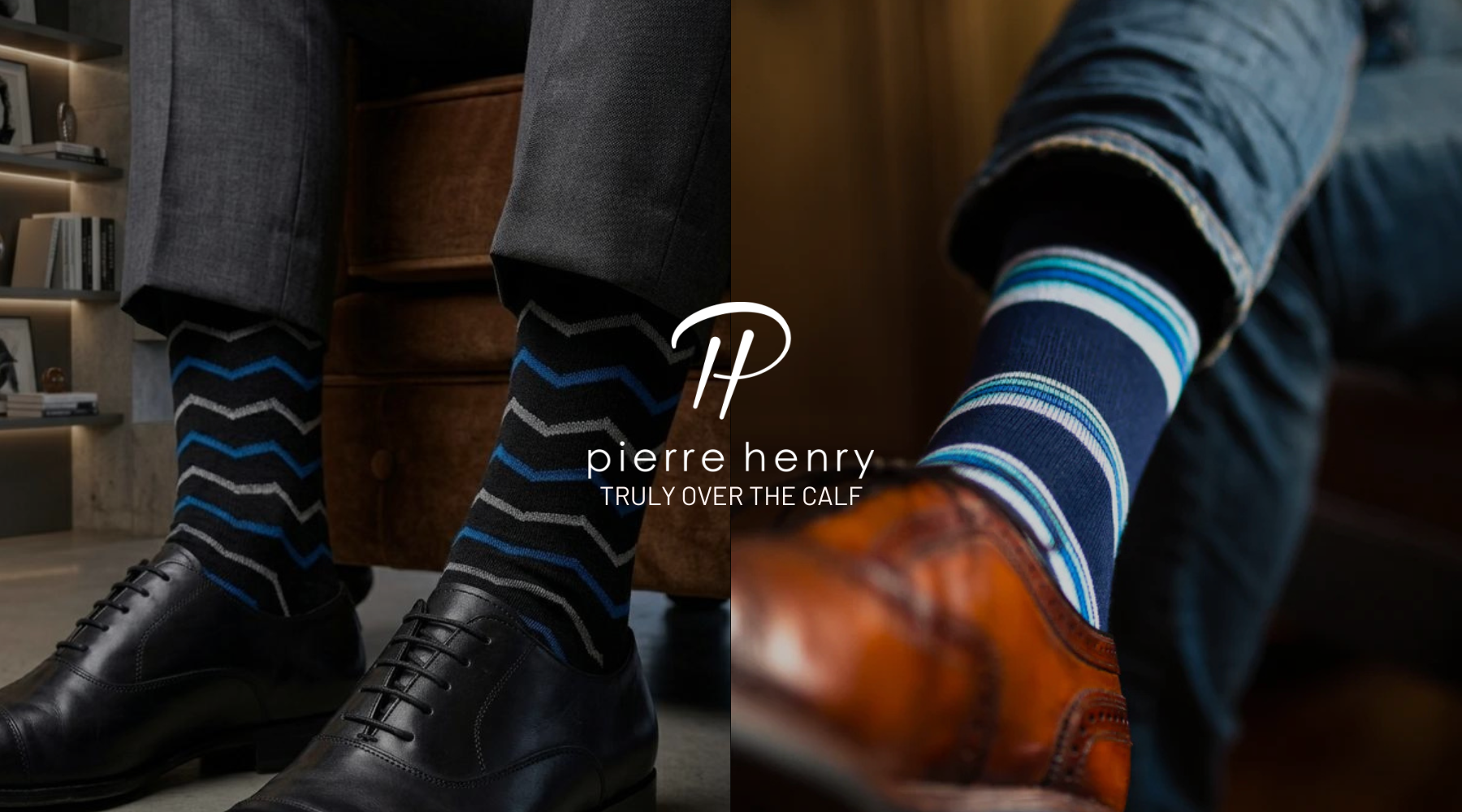
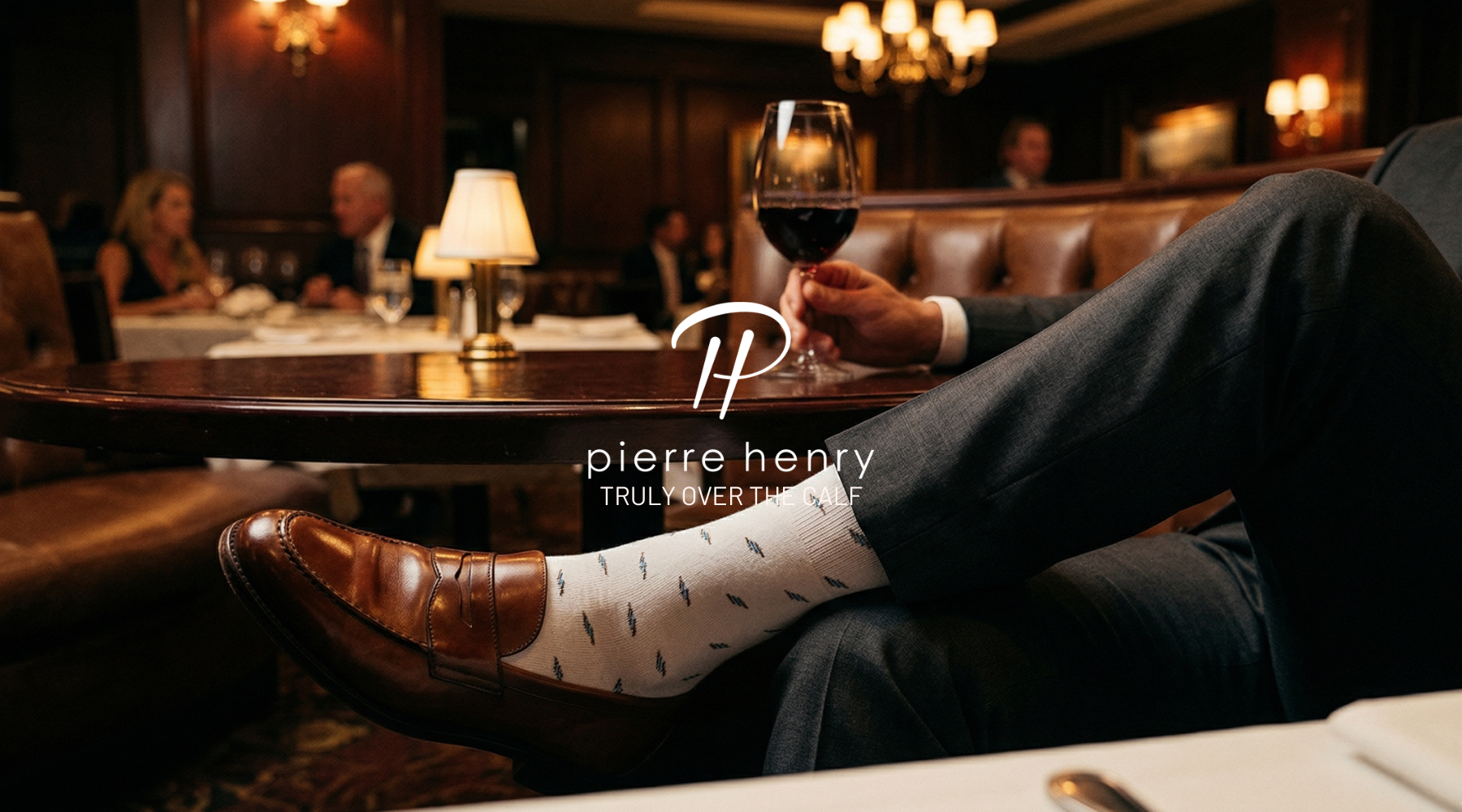
This is not hypothetical. Footwear matters in interviews — men should wear socks, since bare ankles with loafers are not charming. Over-the-calf dress socks that are built to stay up all day are the solution. They extend just below the knee and hold their position regardless of how you sit, cross your legs, or move.
// Pierre Henry Socks
The Sock Built for the Moment That Counts
Manufactured at our family's factory in the Americas under full quality control. Reinforced over-the-calf construction engineered to stay up all day — through every crossed leg, every long meeting, every interview. Classic solids for Tier 1 contexts. Bold patterns that make a statement in Tier 3. Both built the same way.
→ Shop Dress SocksVirtual Interviews: The Special Rules
// Remote & Hybrid Interviews
Same standards. Different considerations.
A virtual interview is still a professional interview. The expectation is that you are dressed as you would be in person — at minimum from the waist up. Beyond clothing, the visual environment you create on screen matters almost as much as what you're wearing.
Clothing on Camera
Avoid busy patterns and thin stripes — they vibrate on camera. Solid colors photograph cleanest. Navy, charcoal, and white work well in most lighting. Avoid pure white if your background is white.
Lighting
Natural light from a window in front of you is ideal. A ring light is the next best option. Never have a bright light source behind you — it turns you into a silhouette.
Background
Clean, neutral, uncluttered. A bookshelf, a plain wall, or a simple interior all work. Avoid virtual backgrounds — they look low-effort and can glitch around your edges.
Dress Fully
Dress completely, not just from the waist up. If you need to stand unexpectedly, you're covered. More importantly: dressing fully puts you in the right mindset. Your posture changes when you're fully dressed.
The Night-Before Checklist
Lay out everything the night before. Not the morning of — the night before. This removes last-minute panic and gives you time to notice a missing button, a scuff on a shoe, or a wrinkle that needs an iron. Work through this list systematically:
// Pre-Interview Checklist
What Never to Wear to an Interview
Some of these are obvious. Some aren't. All of them have cost candidates the offer.
✓ Always Appropriate
- A full matched suit in navy, charcoal, or dark grey
- Freshly pressed white or light blue dress shirt
- Polished leather Oxford or Derby shoes
- Over-the-calf dress socks that stay put
- A classic tie in a conservative pattern
- Simple dress watch on a leather strap
- Belt matched to shoe color exactly
- Clean, trimmed fingernails and groomed hair
✗ Never Wear These
- Sneakers — even "nice" ones, in Tier 1 or 2 contexts
- Short socks that slide down when you sit
- A wrinkled or stained shirt or jacket
- Jeans in formal or business casual contexts
- An unmatched belt and shoe color
- Overpowering cologne or fragrance
- Novelty tie, graphic tees, or loud accessories
- Unpolished or scuffed shoes
Frequently Asked Questions
Should I wear a suit to every job interview?
For Tier 1 industries (law, finance, banking, consulting), yes — always. For Tier 2 and 3, research the company first and apply the "one level up" rule. When in genuine doubt, a well-fitted suit will never hurt you. Being overdressed in an interview is recoverable; being underdressed is not.
Can I wear dark jeans to a job interview?
Only in Tier 3 environments — creative agencies, design firms, media companies, tech startups — and only if the jeans are slim-fitting, dark-wash, without any distressing or fading, and worn with a blazer and leather shoes. In any other context, dress trousers or chinos are the safer choice.
What color suit is best for a job interview?
Navy blue and charcoal grey are the two best choices for any interview context. Navy communicates confidence and approachability. Charcoal communicates authority and precision. Both are universally appropriate in Tier 1 and Tier 2 environments. Navy, gray, and white convey dependability and professionalism, with studies suggesting that blue is associated with reliability by 62% of people.
Do socks actually matter in a job interview?
Yes — more than most men realize. When you sit down and cross your legs, your trouser leg rises and your socks become visible. Over-the-calf dress socks that stay up ensure no bare ankle is ever exposed, maintaining the clean, polished line that a professional outfit requires. Short socks that slip create a disheveled appearance that undermines an otherwise well-dressed look.
What should I wear to a virtual job interview?
Dress exactly as you would for an in-person interview at the same company — at minimum from the waist up, but ideally fully dressed. On camera, favor solid colors over patterns, ensure you have good lighting from in front (not behind), and use a clean, neutral background. Being fully dressed also affects your posture and mental state during the call, which translates into how you come across on screen.
Is it okay to wear brown shoes to a job interview?
Dark brown or oxblood shoes with a navy suit are a sophisticated, fully acceptable choice for most American professional environments. For the most conservative Tier 1 contexts — banking, law, government — black Oxfords remain the safest choice. Whatever color you choose, the shoes must be polished and in excellent condition.
// Don't Let the Last Detail Let You Down
You Prepared Everything. Don't Skip the Socks.
Over-the-calf construction that stays up through every interview, every crossed leg, every long day. Made at our family's factory in the Americas.
⭐⭐⭐⭐⭐ "These are by far the best socks he's ever owned." — Verified Customer

Leave a comment
This site is protected by hCaptcha and the hCaptcha Privacy Policy and Terms of Service apply.